
Start with what changed at work
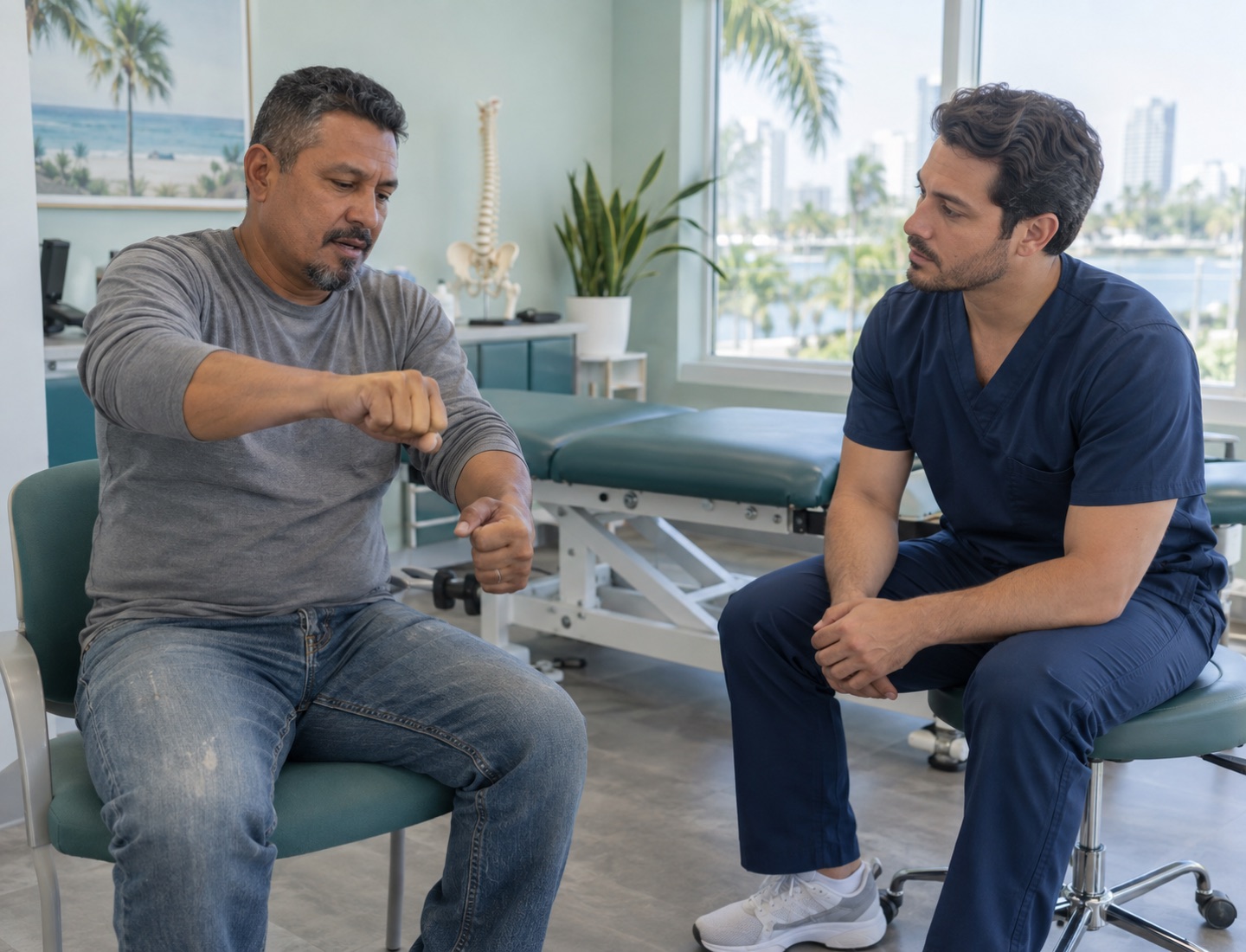
Work-related symptoms may begin after a specific incident or build over repeated tasks. Tell the clinician when the problem started and which parts of the job are difficult now. Include lifting, carrying, reaching, driving, keyboard use or staying in one position. The same job title can involve very different physical demands from one workplace to another.
Make the examination practical
Describe any change in sensation, grip, balance or movement alongside pain. Bring existing reports and explain any work restrictions already given by another clinician. A history and examination help distinguish the concerns that can be addressed in an office from those needing a different assessment. Do not assume that every symptom occurring at work has the same cause.
Connect recommendations to your day
Ask how any proposed care relates to the activity that is limited. A useful conversation may include movement, task demands and the point at which a plan should be reviewed. The practice’s chiropractic and medical services provide options to discuss, but no individual treatment can be selected solely from the description of a job or a symptom on this page.
Clarify the administrative details
Contact the office before a visit to discuss payment and any information required for a work-related appointment. Benefit rules and authorizations depend on your situation and cannot be confirmed here. Follow your employer’s reporting process and ask the relevant insurer about coverage. The clinical evaluation and the administration of a claim are separate questions, and neither implies a guaranteed outcome.
Questions to take with you
Ask whether any work-task recommendations should be discussed with the clinician already managing your injury. Explain which duties can be changed and which cannot. If written restrictions or records are needed, clarify who is responsible for them and how to request them. A clear understanding of those practical details can reduce confusion after the appointment.
Your visit in Kendall
To arrange a non-emergency appointment, phone (305) 388-7577. Bring a medication list and any relevant records you already have. Mention care you are receiving elsewhere so the conversation includes that context. Visit the Kendall location: 12595 S.W. 137th Avenue, Suite 108, in Miami. Call before your visit to discuss insurance or self-pay arrangements and current availability.
When to seek urgent help
After a serious workplace accident, seek emergency help for major injury or sudden weakness. New bladder or bowel problems with back pain also need immediate medical assessment.
Educational information; not a diagnosis. Please book an assessment for advice about your situation. Further reading: NIAMS: back pain care.