
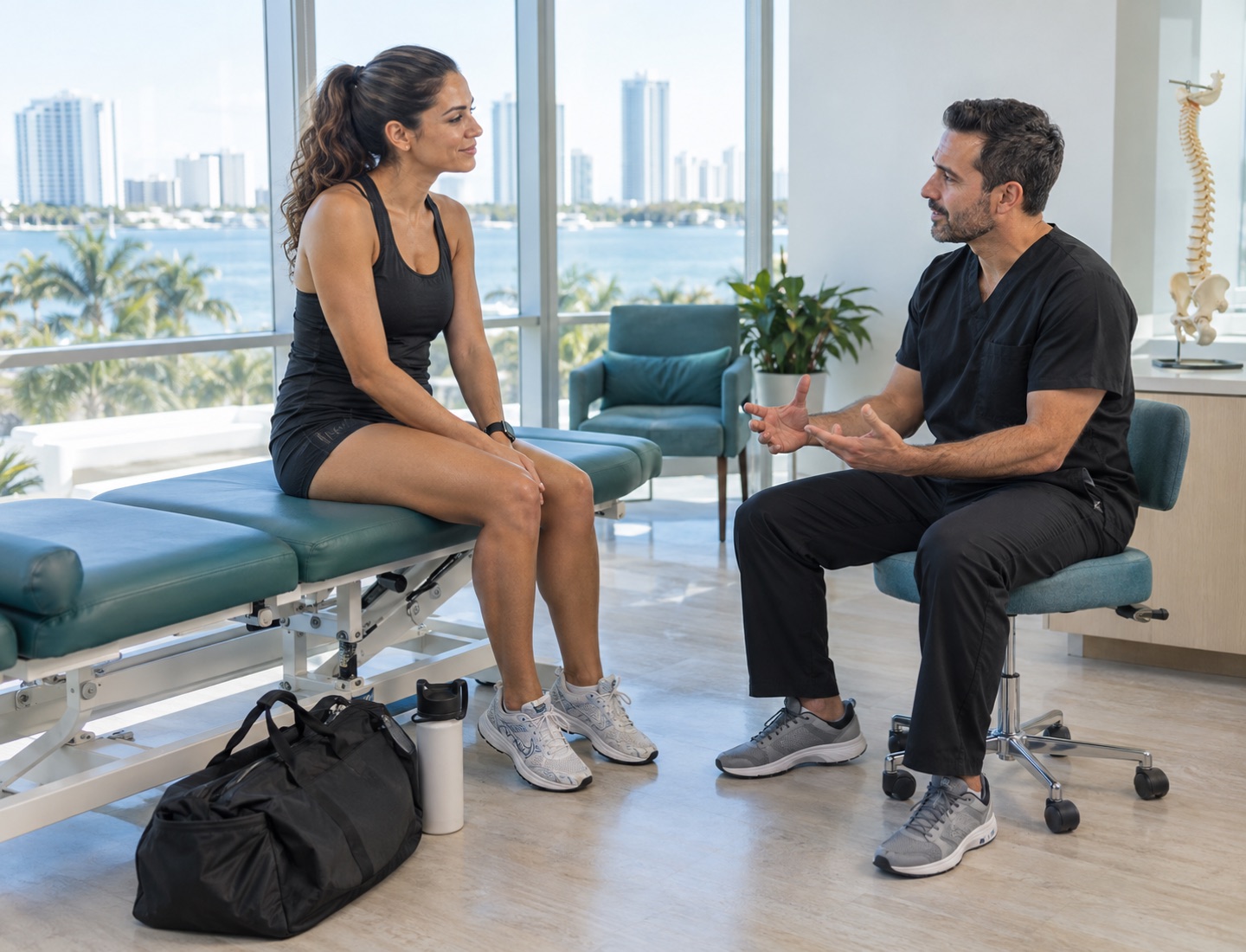
Consider how the injury started
Some sports injuries happen during a single movement or impact. Others emerge gradually as demands on a muscle, tendon or joint increase. Tell the clinician about changes in training, equipment or surfaces, as well as the moment you first noticed pain. Continuing the same activity through worsening symptoms can make it harder to understand what is happening.
Describe the goal and the limitation
Explain what you want to return to and what currently prevents it. Running, lifting, tennis and recreational sports place different demands on the body. Bring information about previous injuries and care you have already tried. Swelling, loss of movement, instability or difficulty bearing weight are relevant details, not simply measures of how much pain you can tolerate.
Discuss options in context
Dr. David Goodrich’s background includes chiropractic sports medicine and strength and conditioning credentials. The practice offers services such as soft tissue care and kinesiology tape. An examination is needed to decide whether these or other approaches are relevant. Ask how the recommendation connects to the affected activity and whether referral or additional testing should be considered first.
Return is a decision, not a date
There is no single return-to-sport schedule that fits every injury. Discuss the movements and demands that need to be assessed before increasing activity. A reduction in pain does not answer every question about readiness. Tell the clinician about competition deadlines, but keep safety and function central to the plan. Reassessment matters when symptoms recur or change during activity.
Questions to take with you
Ask which movements need assessment before you return to training and how a change in symptoms should affect activity. If a coach or another clinician is involved, discuss how their recommendations fit together. Be clear about your usual training load and upcoming commitments so that the conversation reflects the demands you actually expect to face.
Your visit in Kendall
To arrange a non-emergency appointment, phone (305) 388-7577. Bring a medication list and any relevant records you already have. Mention care you are receiving elsewhere so the conversation includes that context. Visit the Kendall location: 12595 S.W. 137th Avenue, Suite 108, in Miami. Call before your visit to discuss insurance or self-pay arrangements and current availability.
When to seek urgent help
A visibly deformed limb, suspected fracture, inability to bear weight after an injury, or signs of a head injury need prompt medical evaluation rather than routine exercise advice.
Educational information; not a diagnosis. Please book an assessment for advice about your situation. Further reading: NIAMS: sports injuries.